Traces of last winter’s snow may be evident in the lawn as spring arrives. Called snow molds, these fungus diseases can leave the lawn looking unsightly.
Pink or gray molds may show up in the lawn as the snow melts and the temperature rises. They leave patches in the lawn and can damage the grass.
Kentucky and annual blue grasses, fescues, bent grasses, rye grasses, Bermuda grass, and Zoysia grasses with bent grasses are susceptible to one or more snow mold fungi. Although it is difficult, even for the experts, to identify lawn fungus disease, here are some clues for these two common ones:
Gray snow mold (Typhula) is caused by snow cover and looks like crusty, matted grass that has lost its green luster. The fungus spreads in a circular pattern up to 3 feet in diameter. If you look closely, you might see fuzzy fungal bodies clinging to blades of grass.
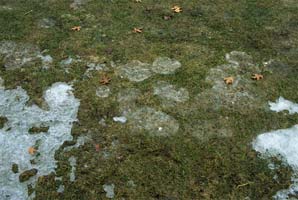 Circular patches of pink snow mold show up as the snow melts on northern turf grass.
© Eric B. Nelson, Cornell University
Pink snow mold (Microdochium nivale or Fusarium nivale) does not need snow to occur, although it can contribute to the problem. Sometimes called Fusarium patch, wet conditions are more apt to create the right environment for this fungus, which first appears as 1- to 3-inch diameter water-soaked rings. The yellow, orange-red or brown-red circles expand to about 12 inches in diameter, but are smaller and more round, than gray snow mold. When exposed to light, the circles may have a pink cast, giving the mold its name.
As ugly as these molds are, they usually can be controlled with some simple steps to prevent them.
- In spring, rake the area to remove dead grass and encourage new growth. Over seed the area if sparse. Use high-quality grass seed that is resistant to fungus disease, such as GreenView Fairway Formula Grass Seed.
- Rarely is a fungicide recommended for the home landscape. The mold normally clears up when environmental conditions improve.
- Continue to mow the lawn, as needed.
- Do not apply a fast-acting nitrogen fertilizer in fall. This encourages succulent, tender growth that is easily damaged by winter conditions, making the grass susceptible to disease.
- Avoid walking on snow- or ice-covered grass.
For more information about these and other lawn diseases, please check with your county extension agent.